

Present Perfect Continuous
The present perfect continuous tense is used to describe actions that started in the past and are still continuing or have recently stopped, focusing on the duration or process of the action.
⏰ When do we use Present Perfect Continuous?
- Describe actions continuing from the past into the present:
- I have been studying English for two years.
- They have been living in Bogotá since 2018.
- Talk about recently finished actions with present results:
- She is tired because she has been working all day.
- He looks happy because he has been dancing.
- Emphasize duration of an activity:
- They have been waiting for an hour.
- We have been talking for a while.
- Explain present results through past actions:
- He’s out of breath because he has been running.
- Why are your hands dirty? I’ve been gardening.
📌 Structure
Affirmative: Subject + have/has + been + verb-ing
Negative: Subject + have/has + not + been + verb-ing
Question: Have/Has + subject + been + verb-ing?
📝 Notes
Use the present perfect continuous to highlight how long an action has been happening and whether it’s still happening or recently finished. Use “for”, “since”, and “lately” to give more context.
- I have been working for two hours.
- She has been studying since 9 AM.
- I have been feeling tired lately.
💬 Examples
✅ Positive Examples
- I have been learning to play the piano for a few months.
- They have been living in this city for ten years.
- She has been reading that book all day.
❌ Negative Examples
- He hasn’t been studying for the exam.
- They haven’t been working on the report.
- She hasn’t been feeling well lately.
❓ Question Examples
- How long have you been waiting?
- Have they been working on the project?
- Has she been feeling okay lately?
Ready to Talk About Actions That Started in the Past and Are Still Ongoing?
Using the Present Perfect Continuous (has/have been + -ing) correctly is a fantastic step to describing actions that began at some point in the past and are still continuing up to the present moment. It’s perfect for explaining duration!
Do you want to practice forming these sentences and using them to discuss experiences and situations that are still relevant now? My online English classes offer fun, interactive ways to master the Present Perfect Continuous and all other essential grammar points. You’ll get plenty of chances to speak and build your confidence.
Let’s plan your English success together!
Click here to find out more and book your trial class today!
Present Perfect Simple vs. Present Perfect Continuous
Distinguishing between completed results and ongoing activities
⏰ When do we use these tenses?
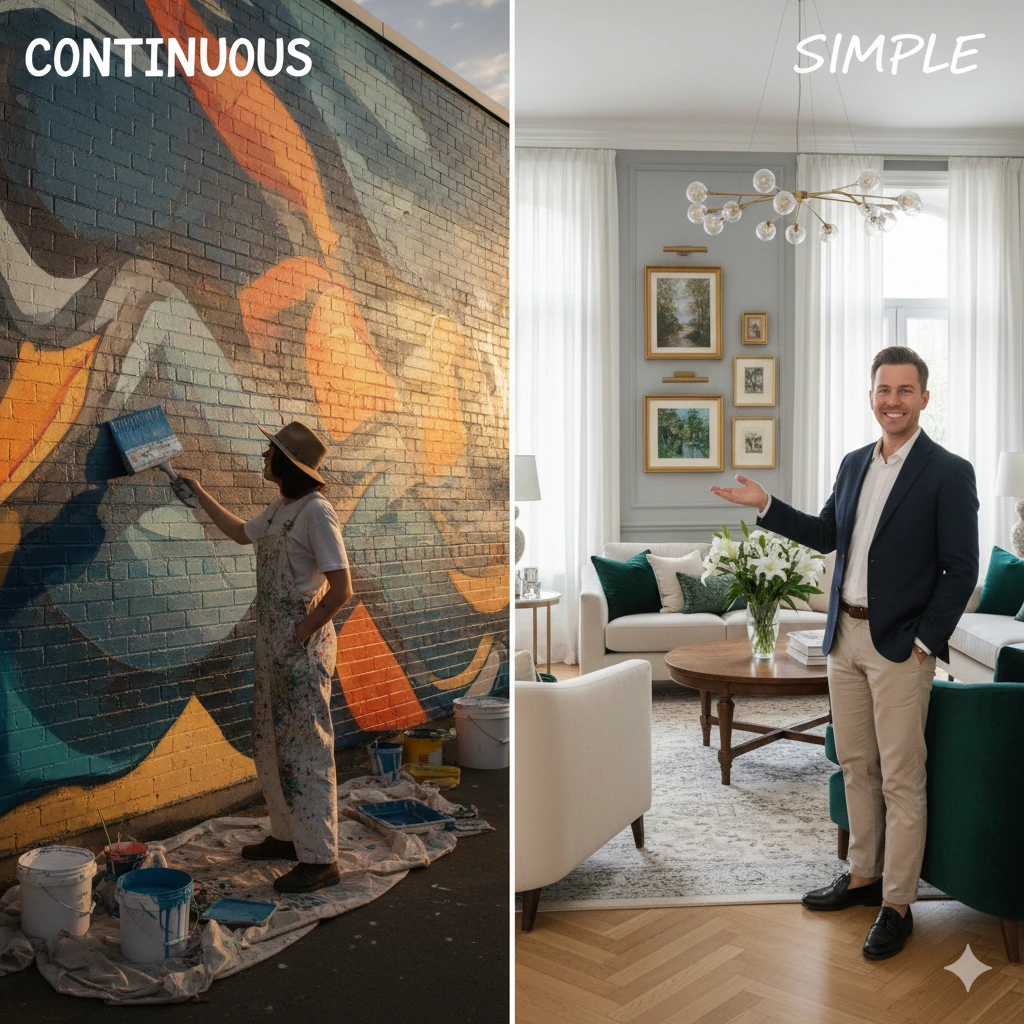
We use the Present Perfect Simple to focus on the result of a completed action or to state “how many” times something happened. In contrast, we use the Present Perfect Continuous to focus on the activity itself, emphasizing duration or an action that is still unfinished. Additionally, we use the Simple form for “state verbs” (like know or like) because they cannot usually be used in the continuous form.
📌 Structure
| Tense | Positive Structure | Negative Structure |
|---|---|---|
| Present Perfect Simple | Subject + have/has + Past Participle | Subject + haven’t/hasn’t + Past Participle |
| Present Perfect Continuous | Subject + have/has + been + Verb-ing | Subject + haven’t/hasn’t + been + Verb-ing |
📝 Notes
- State Verbs: Never use the continuous form with verbs like believe, own, belong, or know.
- Result vs. Process: Use the Simple form for “I’ve written three emails” (result) and the Continuous for “I’ve been writing emails all morning” (process).
- Permanent vs. Temporary: We often use the Simple form for permanent situations and the Continuous for temporary ones.
💬 Examples
Simple (Result)
- He has cooked a delicious dinner for us.(The meal is ready on the table; the focus is on the completed achievement.)
- I have painted the living room; come and see how bright it looks now! (The job is finished; the focus is on the new appearance).
- She has finished her report, so she can finally relax this evening. (The task is over; the focus is on her current state of freedom).
Continuous (Duration)
- He has been cooking in the kitchen for hours, so the whole house smells like spices. (The focus is on the activity itself and the physical evidence (the smell) of that ongoing effort.)
- I have been painting the living room all day, which is why there are paint splashes on my clothes. (The activity explains the mess/tiredness; the room might not be finished yet).
- She has been working on her report since 9:00 AM, and she still has two sections left. (The focus is on how she has spent her time).
State Verb
- I have had this headache since I woke up this morning. (In this context, have describes a state of being/possession of a feeling, so we do not say “I have been having.”)
- We have owned this house for twenty years. (Ownership is a state, not an action you can “be doing”).
- He has always believed in the importance of hard work. (Belief is a mental state that remains constant over time).